
Hyundai Elantra: Specifications, Consumer Information and Reporting Safety Defects
Dimensions, Engine, Bulb Wattage
Dimensions
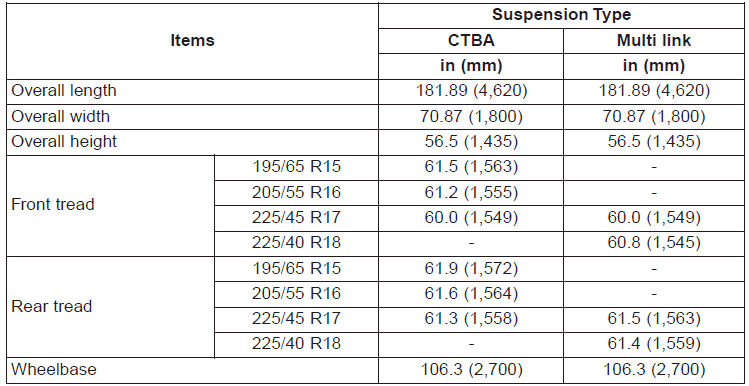
CTBA : coupled torsion beam axle
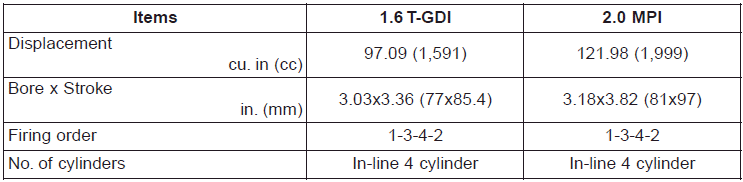
Engine
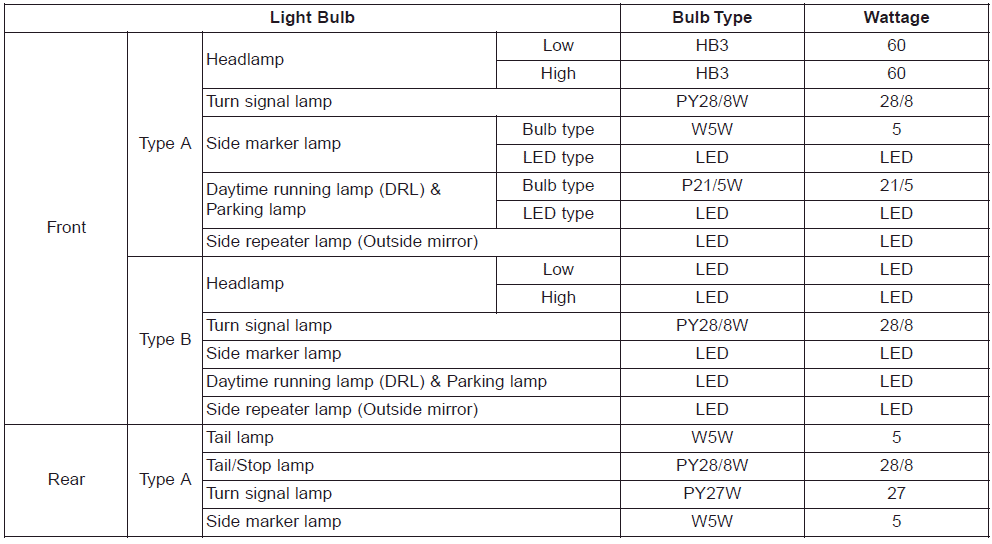
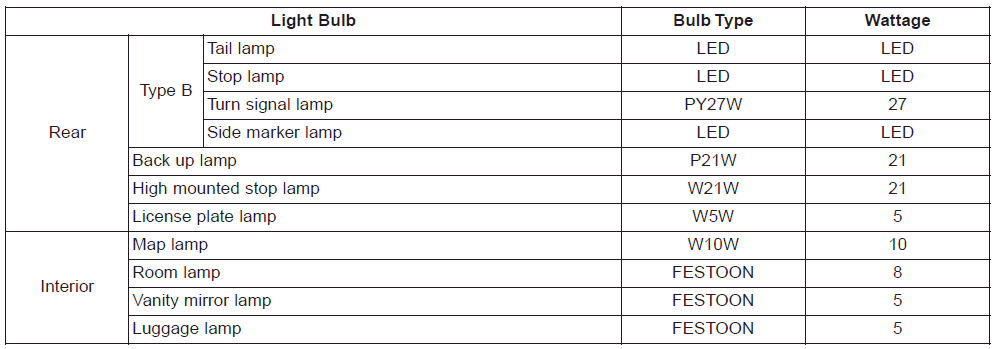
Bulb Wattage
Tires and Wheels
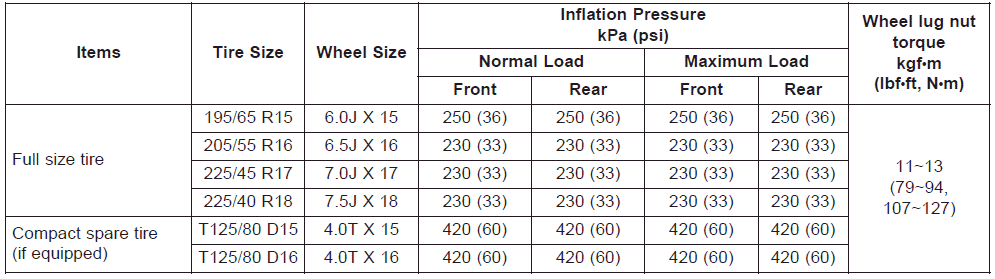
If your vehicle is not equipped with a compact spare tire, your vehicle will be equipped with a Tire Mobility Kit.
NOTICE
- It is permissible to add 3 psi to the standard tire pressure specification if colder temperatures are expected soon. Tires typically loose 1psi (7kPa) for every 12°F temperature drop. If extreme temperature variations are expected, recheck your tire pressure as necessary to keep them properly inflated.
- An air pressure generally decreases, as you drive up to a high-altitude area above sea level. Thus, if you plan to drive a high-altitude area, check the tire pressures in advance. If necessary, inflate them to a proper level. (Air inflation per altitude : +2.4 psi/1 mile)
CAUTION
When replacing tires, use the same size originally supplied with the vehicle. Using tires of a different size can damage the related parts or not work properly.
Volume and Weight, Air Conditioning System
Volume and Weight

M/T : Manual transmission
IVT : Intelligent Variable Transmission
DCT : Dual clutch transmission
Air Conditioning System

Contact an authorized HYUNDAI dealer for more details.
Recommended Lubricants and Capacities
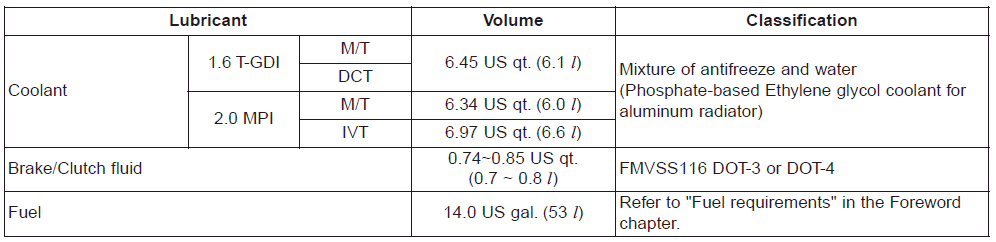
To help achieve proper engine and powertrain performance and durability, use only lubricants of the proper quality. The correct lubricants also help promote engine efficiency that results in improved fuel economy.These lubricants and fluids are recommended for use in your vehicle.
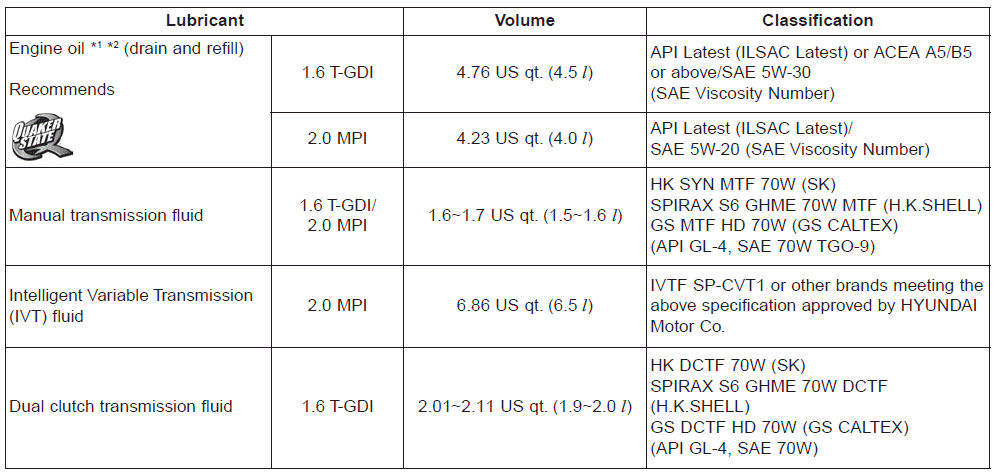
*1 : Refer to the recommended SAE viscosity numbers on the next page.
*2 : Engine oils labeled Energy Conserving Oil are now available. Along with other
additional benefits, they contribute to fuel economy by reducing the amount of fuel
necessary to overcome engine friction. Often, these improvements are difficult to
measure in everyday driving, but in a year's time, they can offer significant cost
and energy savings.
M/T : Manual transmission
IVT : Intelligent Variable Transmission
DCT : Dual clutch transmission
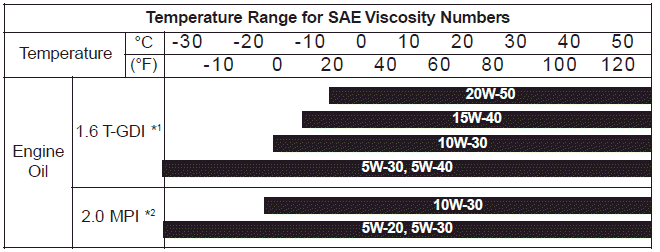
Recommended SAE viscosity number
CAUTION
Always be sure to clean the area around any filler plug, drain plug, or dipstick before checking or draining any lubricant. This is especially important in dusty or sandy areas and when the vehicle is used on unpaved roads. Cleaning the plug and dipstick areas will prevent dirt and grit from entering the engine and other mechanisms that could be damaged.
Engine oil viscosity (thickness) has an effect on fuel economy and cold weather operating (engine start and engine oil flowability). Lower viscosity engine oils can provide better fuel economy and cold weather performance, however, higher viscosity engine oils are required for satisfactory lubrication in hot weather.
Using oils of any viscosity other than those recommended could result in engine damage.
When choosing an oil, consider the range of temperature your vehicle will be operated in before the next oil change. Proceed to select the recommended oil viscosity from the chart.
Vehicle Identification Number (VIN), Vehicle Certification Label
Vehicle Identification Number (VIN)
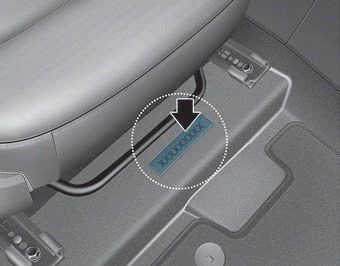
â– Frame number
The vehicle identification number (VIN) is the number used in registering your car and in all legal matters pertaining to its ownership, etc.
The number is punched on the floor under the passenger seat. To check the number, open the cover.
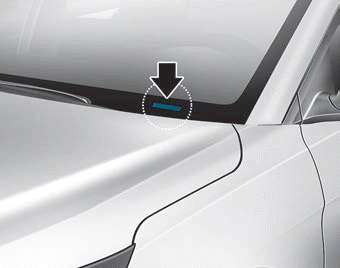
â– VIN label
The VIN is also on a plate attached to the top of the dashboard. The number on the plate can easily be seen through the windshield from outside.
Vehicle Certification Label
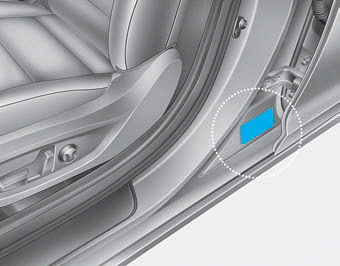
The vehicle certification label attached on the driver's side center pillar gives the Vehicle Identification Number (VIN).
Tire Specification and Pressure Label
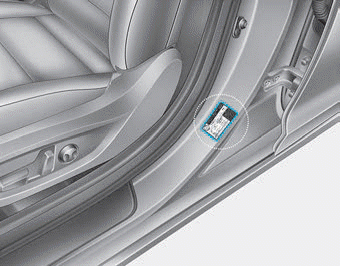
The tires supplied on your new vehicle are chosen to provide the best performance for normal driving.
The tire label located on the driver’s side center pillar gives the tire pressures recommended for your car.
Engine Number, Refrigerant Label
Engine Number
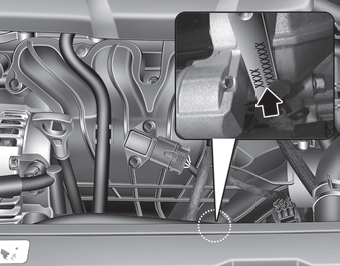
â– 1.6 T-GDI
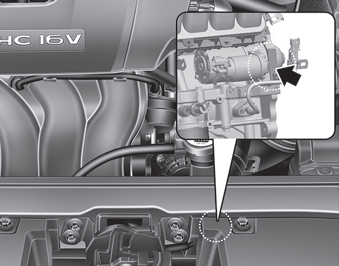
â– 2.0 MPI
Refrigerant Label
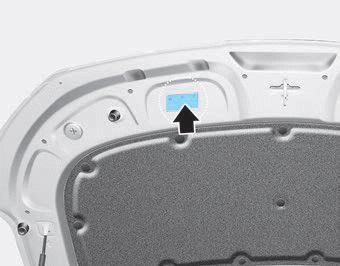
The refrigerant label provides information such as refrigerant type and amount.
The label is located on the underside of the hood.