Hyundai Elantra: Engine Electrical System / Ignition System
Description and Operation
Ignition timing is controlled by the electronic control ignition timing system.
The standard reference ignition timing data for the engine
operating conditions are pre-pro grammed in the memory of the ECM
(Engine Control Module).
The engine operating conditions (speed, load, warm-up
condition, etc.) are detected by the various sensors. Based on these
sensor signals and the ignition timing data, signals to interrupt the
primary current are sent to the ECM.
The ignition coil is activated, and timing is controlled.
Repair procedures
| Inspect ignition coil assembly and Perform spark test |
| 1. |
Check for DTCs.
| • |
If a DTC is present, perform troubleshooting in accordance with the procedure for that DTC. (Refer to DTC guide) |
|
|
| 2. |
Check if sparks occur.
| (1) |
Remove the engine cover. |
| (2) |
Remove the ignition coils. |
| (3) |
Using a spark plug wrench, remove the spark plugs. |
| (4) |
Disconnect the injector extension connectors. |
| (5) |
Ground the spark plug to the engine. 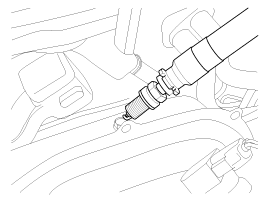
|
| (6) |
Check if sparks occur at each spark plug while engine is being cranked. |
| • |
Do not crank the engine for more then 5 seonds. |
|
|
| 3. |
If sparks do not occur, perform the following test. 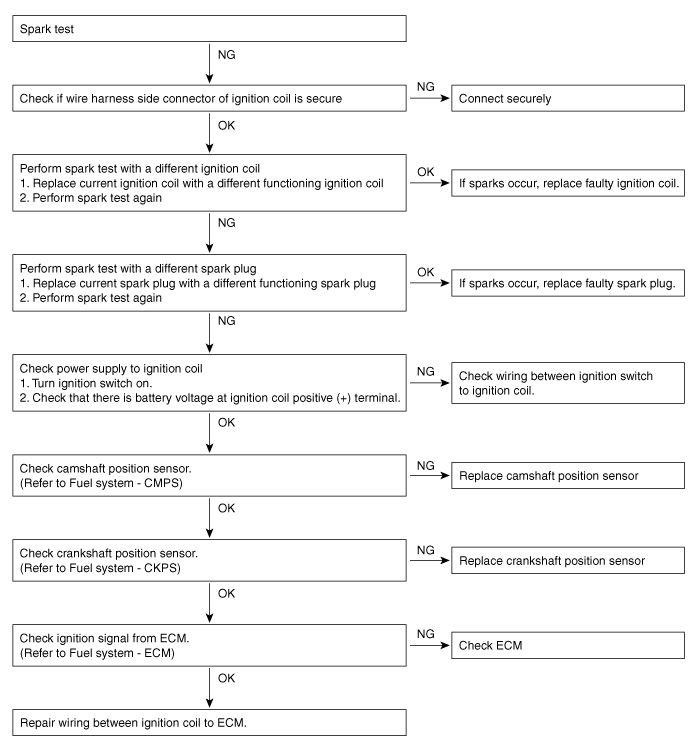
|
| 4. |
Using a spark plug wrench, install spark plugs. |
| 5. |
Install the ignition coils. |
| 6. |
Install the engine cover. |
Ignition Coil Description and Operation
An ignition coil is an induction coil in an engine's ignition
system which transforms the battery's low voltage to the high voltage
needed to create an electric spark in the spark plugs to ignite the
fuel. Coils have an internal resistor while others rely on a resistor
wire or an external resistor to limit the current flowing into the coil
from the battery 12 V supply.
Ignition Coil Specifications
Item
| Specification
|
Primary Coil Resistance (?)
| 0.61 ± 15% [20°C (68°F)]
|
Secondary Coil Resistance (k?)
| 7.5 ± 15% [20°C (68°F)]
|
Ignition Coil Schematic Diagrams
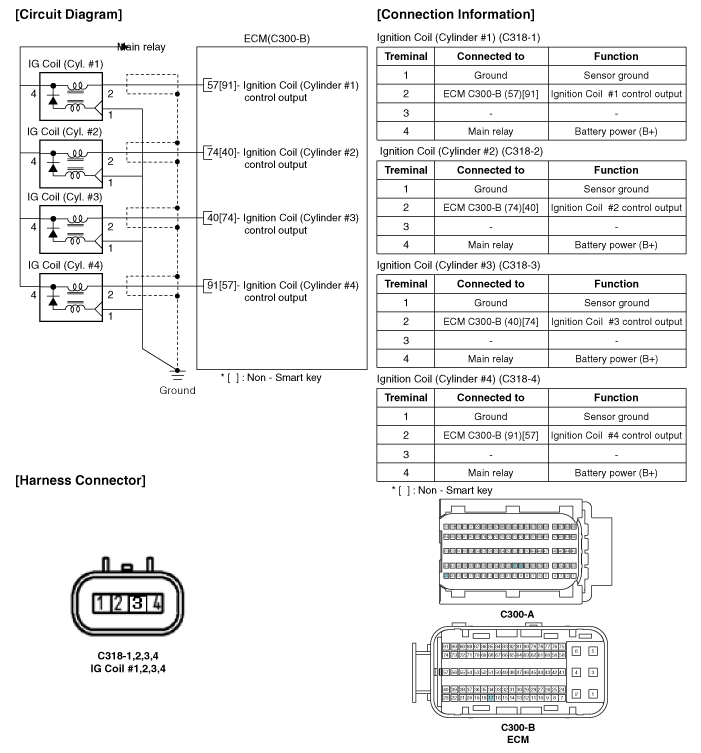
Ignition Coil Repair procedures
| 1. |
Turn ignition switch OFF and disconnect the negative (-) battery cable. |
| 2. |
Remove the engine cover. |
| 3. |
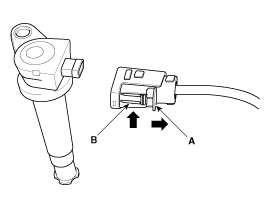
Disconnect the ignition coil connector (A). 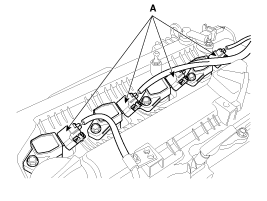
| • |
When removing the ignition coil connector, pull the lock pin (A) and push the clip (B). |
|
|
| 4. |
Remove the ignition coil (A). 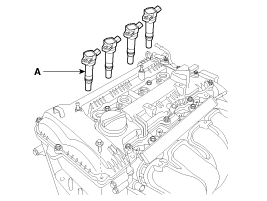
|
| 1. |
Install in the reverse order of removal.
Ignition coil installation bolts:
9.8 ~ 11.8 N.m (1.0 ~ 1.2 kgf.m, 7.2 ~ 8.7 Ib-ft)
|
|
| 1. |
Measure the primary coil resistance between terminals 1 and 2. 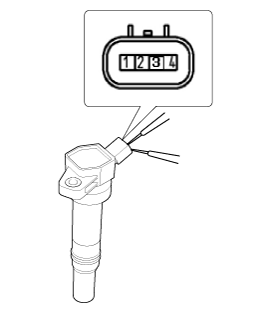
Standard value : 0.61 ? ± 15%
|
|
Spark Plug Description and Operation
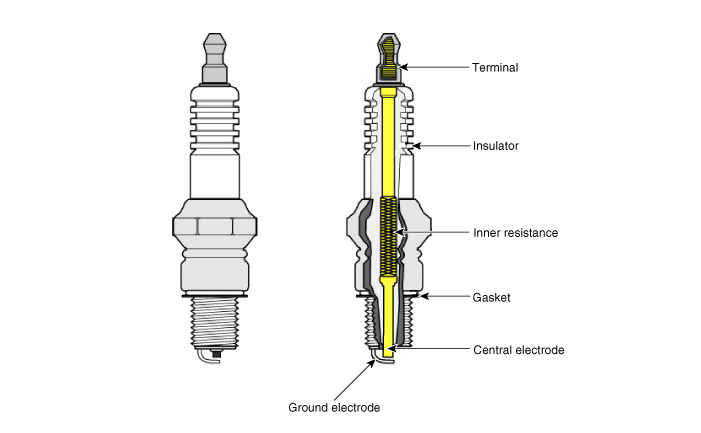
A spark plug is a device for delivering electric current from
an ignition system to the combustion chamber of a spark-ignition engine
to ignite the compressed fuel/air mixture therein by means of an
electric spark, while containing combustion pressure within the engine. A
spark plug has a metal threaded shell, electrically isolated from a
central electrode by a porcelain insulator.
Spark Plug Specifications
Item
| Specification
|
Type
| ELR9IQP9+
|
Gap
| 0.8 ~ 0.9 mm (0.0314 ~ 0.0354 in.)
|
Spark Plug Repair procedures
| 1. |
Accelerate the engine to about 3,000 rpm 3 times or more. |
| 2. |
Remove the spark plug. |
| 3. |
Check the spark plug visually.
If the electrode is dry, the spark plug is normal.
If the electrode is wet, check the damage and electrode gap as below. |
| 1. |
Check the spark plug for any damage on its thread and insulator.
If there is damage, replace the spark plug. |
| 2. |
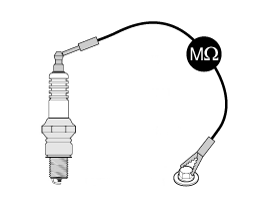
Check the electrode. Measure the insulation resistance with an ohmmeter.
If the resistance is less than the specified value, adjust the electrode gap.
Specification: 10 M? or more
|
|
| 3. |
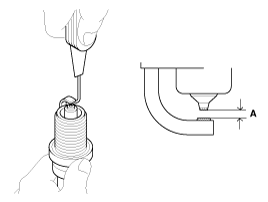
Check the spark plug electrode gap.
If the gap is greater than the maximum, replace the spark plug.
Specification: 0.8 ~ 0.9 mm (0.0314 ~ 0.0354 in.)
|
| • |
If adjusting the gap of a new spark plug, bend only the base of the ground electrode. Do not touch the tip.
Never attempt to adjust the gap on a used plug. |
|
|
The combustion temporarily becomes unstable, due to the aged
fuel and the carbon deposits accumulated on the spark plug(s) after
long-term storage.
| 1. |
Start the engine and keep the engine running at idle for 2 minutes. |
| 2. |
Step on the accelerator pedal and hold it steady at 4500 rpm
with the shift lever in N position to warm up the engine until the
temperature of the engine coolant reaches 80°C. |
| 3. |
Keep the engine running at 2500~3000 rpm in the N position for 15 minutes. 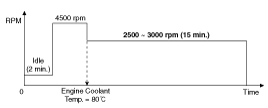
|
| • |
The 2nd method should be performed only if the 1st method fails (the misfire-related codes recur).
|
|
| 1. |
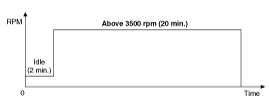
Start the engine and keep the engine running at idle for 2 minutes. |
| 2. |
Drive the vehicle for over 20 minutes, keeping the engine speed above 3500 rpm.
| • |
If equipped with manual transaxle, shift the gear properly for keeping the engine speed above 3500 rpm. |
|
|
| 1. |
Remove the ignition coil.
(Refer to Ignition System - "Ignition Coil") |
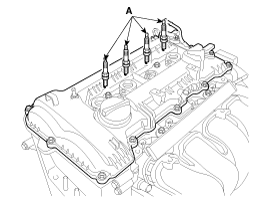
| 2. |
Using a spark plug wrench, remove the spark plug (A).
| • |
Be careful that no contaminates enter into spark plug holes. |
|
|
| 1. |
Install in the reverse order of removal.
Tightening torque:
14.7 ~ 24.5 N.m (1.5 ~ 2.5 kgf.m, 10.9 ~ 18.0 Ib-ft)
|
|
Troubleshooting
Ignition System
SymptomSuspect AreaRemedyEngine will not start or is hard to start (Cranks OK)Ignition lock switchInspect ignition lock switch, or replace as requiredIgnition c ...
Other information:
Hyundai Elantra AD (2016-2020) Service Manual: In-car Sensor Description and Operation
Description
The In-car air temperature sensor is built in the heater & A/C control unit.
The sensor contains a thermistor which measures the
temperature of the inside. The signal decided by the resistance value
which changes in accordance with perceived inside temperature, is
delivered ...
Hyundai Elantra AD (2016-2020) Owners Manual: SRS Care
The SRS is virtually maintenancefree and there are no parts you can safely service
by yourself. If the SRS air bag warning light does not illuminate when the ignition
switch is in the ON position, or continuously remains on, have your vehicle immediately
inspected by an authorized HYUNDAI deal ...


 Troubleshooting