
Hyundai Elantra: Emission Control System / General Information
Hyundai Elantra AD (2016-2020) Service Manual / Emission Control System / General Information
Description and Operation
| Description |
Emissions Control System consists of three major systems.
| - |
The Crankcase Emission Control System prevents blow-by gas
from releasing into the atmosphere. This system recycles gas back into
the intake manifold (Closed Crankcase Ventilation Type). |
| - |
The Evaporative Emission Control System prevents evaporative
gas from releasing into the atmosphere. This system burns gas at
appropriate engine operating condition after gathering it in the
canister. |
| - |
The Exhaust Emission Control System converts the three
pollutants [hydrocarbons (HC), carbon monoxide (CO), and oxides of
nitrogen (NOx)] into harmless substances by using the 3-way catalytic
converter.
|
Specifications
| Specifications |
Purge Control Solenoid Valve (PCSV)
? Specification
| Item | Specification |
| Coil Resistance (?) | 22.0 ~ 26.0 [20°C(68°F)] |
Fuel Tank Pressure Sensor (FTPS)
? Type: Piezo-Resistive Pressure Sensor
? Specification
| Pressure [kPa (kgf/cm?, in H2O)] | Output Voltage (V) |
| -6.67 (-0.068, -26.8) | 0.5 |
| 0 | 2.5 |
| +6.67 (0.068, 26.8) | 4.5 |
Canister Close Valve (CCV)
? Specification
| Item | Specification |
| Coil Resistance (?) | 19.5 ~ 22.5 [20°C(68°F)] |
| Tightening Torques |
| Item | kgf.m | N.m | lb-ft |
| Positive crankcase ventilation valve installation | 0.2 ~ 0.3 | 1.96 ~ 2.94 | 1.45 ~ 2.17 |
| Canister installation bolt/nut | 2.0 ~ 3.0 | 19.6 ~ 29.4 | 14.5 ~ 21.7 |
Troubleshooting
| Troubleshooting |
| Symptom | Suspect area |
| Engine will not start or hard to start | Vapor hose damaged or disconnected |
| Engine hard to start | Malfunction of the Purge Control Solenoid Valve |
| Rough idle or engine stalls | Vapor hose damaged or disconnected |
| Malfunction of the PCV valve | |
| Rough idle | Malfunction of the Evaporative Emission Control System |
| Excessive oil consumption | Positive crankcase ventilation line clogged |
Schematic Diagrams
| Schematic Diagram |
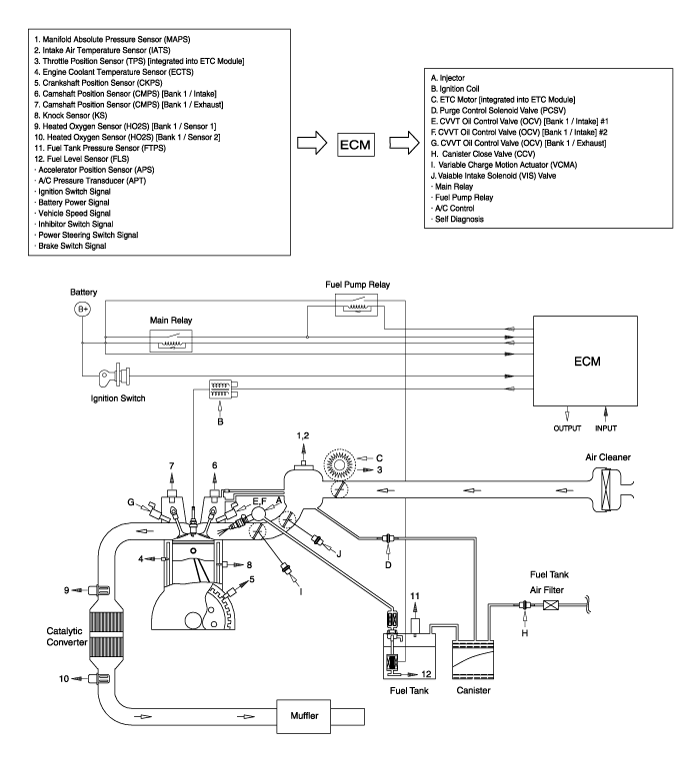
Components and Components Location
| Components Location |
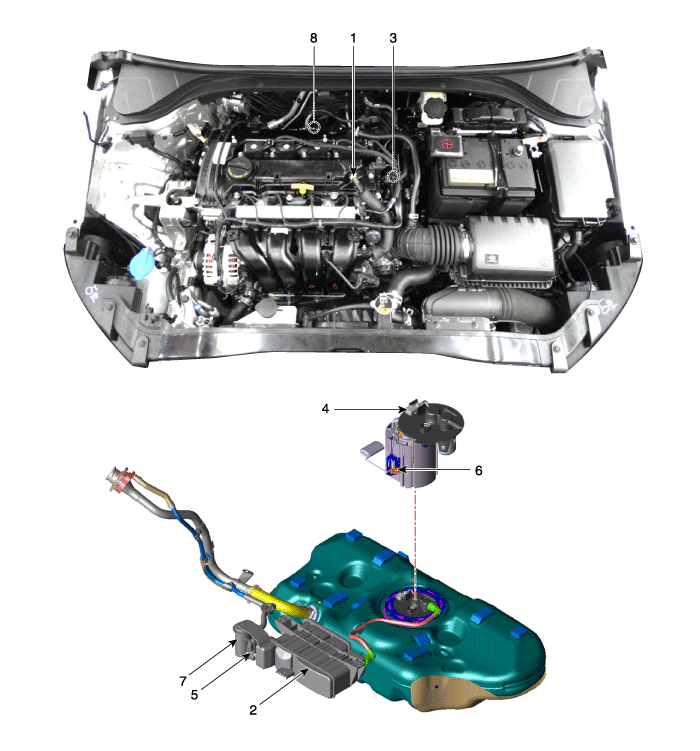
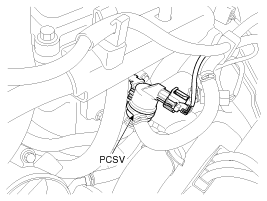
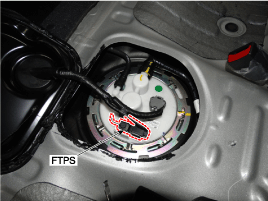
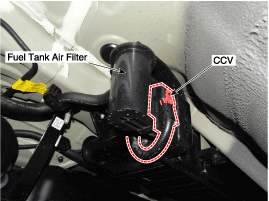
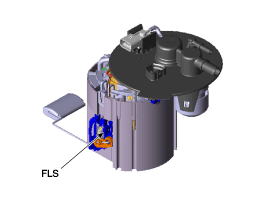
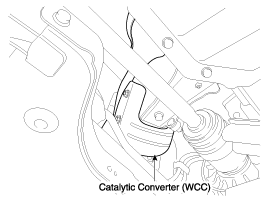
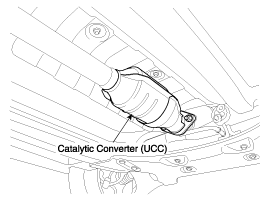
| 1. PCV valve 2. Canister 3. Purge control solenoid valve (PCSV) 4. Fuel tank pressure sensor (FTPS) | 5. Canister close valve (CCV) 6. Fuel level sensor (FLS) 7. Fuel tank air filter 8. Catalytic converter |
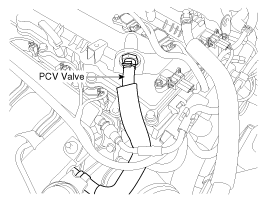
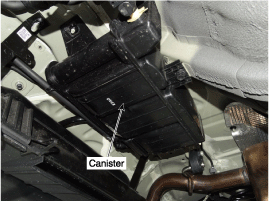
| 1. PCV Valve | 2. Canister |
|
|
| 3. Purge Control Solenoid Valve (PCSV) | 4. Fuel Tank Pressure Sensor (FTPS) |
|
|
| 5. Canister Close Valve (CCV) 7. Fuel Tank Air Filter | 6. Fuel Level Sensor (FLS) |
|
|
| 8. Catalytic Converter (WCC) | 8. Catalytic Converter (UCC) |
|
|

Other information:
Hyundai Elantra AD (2016-2020) Owners Manual: Securing a child restraint with the LATCH anchors system
To install a LATCH-compatible child restraint in either of the rear outboard
seating positions:
1. Move the seat belt buckle away from the lower anchors.
2. Move any other objects away from the anchors that could prevent a secure connection
between the child restraint and the lower anchors.
3 ...
Hyundai Elantra AD (2016-2020) Service Manual: Dynamic Damper Components and Components Location
Components
1. BJ assembly 2. BJ circlip 3. BJ boot band 4. BJ boot 5. Dynamic damper band 6. Dynamic damper7. Shaft8. TJ boot band9. TJ boot10. Spider assembly11. Snap ring12. TJ housing13. Clip
...
© 2018-2026 www.helantraad.com
