
Hyundai Elantra: Air Bag - Advanced Supplemental Restraint System / Why Didn't My Air Bag Go Off in a Collision?
There are certain types of accidents in which the air bag would not be expected to provide additional protection. These include rear impacts, second or third collisions in multiple impact accidents, as well as low speed impacts. Damage to the vehicle indicates a collision energy absorption, and is not an indicator of whether or not an air bag should have inflated.
Air bag collision sensors
WARNING
To reduce the risk of an air bag deploying unexpectedly and causing serious injury or death:
- Do not hit or allow any objects to impact the locations where air bags or sensors are installed.
- Do not perform maintenance on or around the air bag sensors. If the location or angle of the sensors is altered, the air bags may deploy when they should not or may not deploy when they should.
- Do not install bumper guards or replace the bumper with a non-genuine HYUNDAI parts. This may adversely affect the collision and air bag deployment performance.
- Place the ignition switch in the LOCK/OFF or ACC position when the vehicle is being towed to prevent inadvertent air bag deployment.
- Have all air bag repairs conducted by an authorized HYUNDAI dealer.
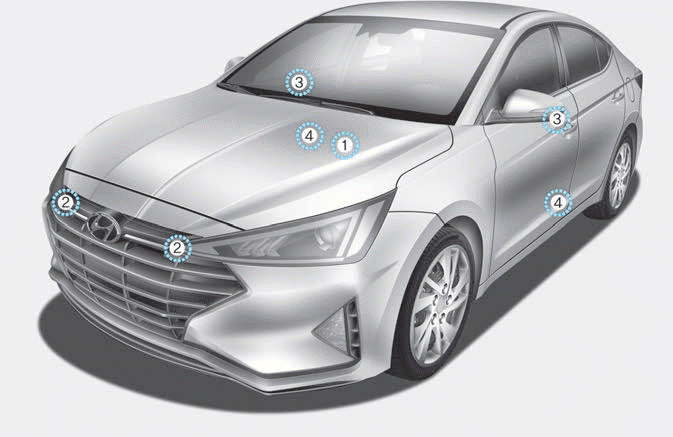
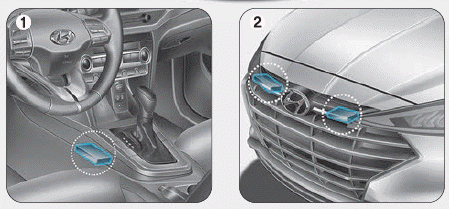
1. SRS control module/ Rollover sensor
2. Front impact sensor
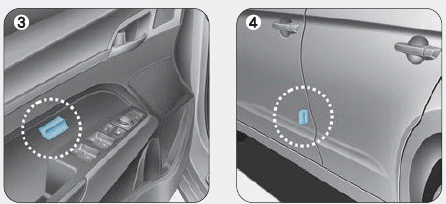
3. Side pressure sensor
4. Side impact sensor
Air bag inflation conditions
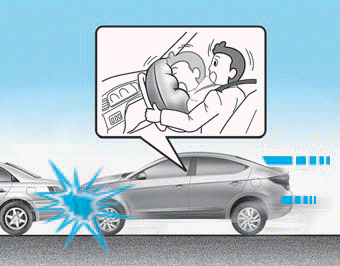
Front air bags
Front air bags and the driver’s knee air bag are designed to inflate in a frontal collision depending on the the severity of impact of the front collision.
Side and curtain air bags
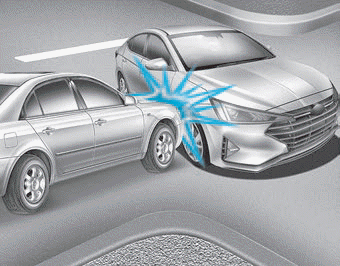
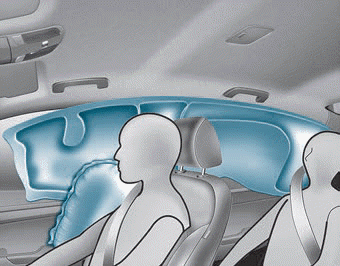
Side and curtain air bags are designed to inflate when an impact is detected by side collision sensors depending on the severity of impact resulting from a side impact collision.
Although the driver’s and front passenger’s air bags are designed to inflate only in frontal collisions, they also may inflate in other types of collisions if the front impact sensors detect a sufficient impact. Side and curtain air bags are designed to inflate only in side impact collisions or rollover situations, but they may inflate in other collisions if the side impact sensors detect a sufficient impact.
If the vehicle chassis is impacted by bumps or objects on unimproved roads, the air bags may deploy. Drive carefully on unimproved roads or on surfaces not designed for vehicle traffic to prevent unintended air bag deployment.
Air bag non-inflation conditions
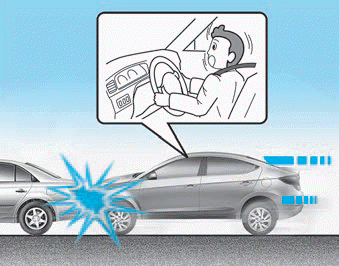
In certain low-speed collisions the air bags may not deploy. The air bags are designed not to deploy in such cases because they may not provide benefits beyond the protection of the seat belts.
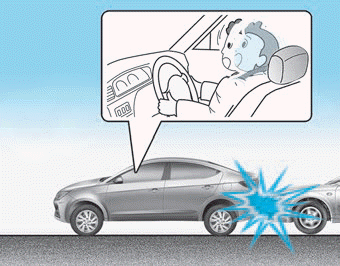
Front air bags are not designed to inflate in rear collisions, because occupants are moved backward by the force of the impact. In this case, inflated air bags would not provide any additional benefit.
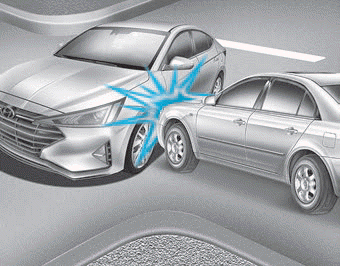
Front air bags may not inflate in side impact collisions, because occupants move in the direction of the collision, and thus in side impacts, front air bag deployment would not provide additional occupant protection.
However, side and curtain air bags may inflate depending on the severity of impact.
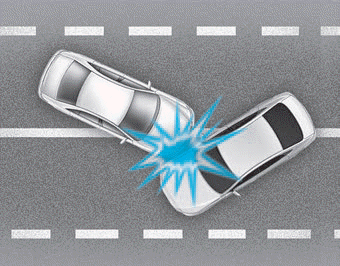
In an angled collision, the force of impact may direct the occupants in a direction where the air bags would not be able to provide any additional benefit, and thus the sensors may not deploy any air bags.
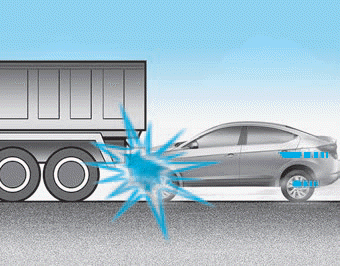
Just before impact, drivers often brake heavily. Such heavy braking lowers the front portion of the vehicle causing it to "ride" under a vehicle with a higher ground clearance. Air bags may not inflate in this "underride" situation because deceleration forces that are detected by sensors may be significantly reduced by such "underride" collisions.
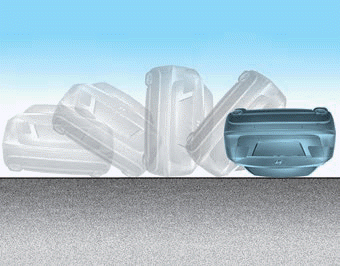
Front air bags may not inflate in rollover accidents because air bag deployment could not provide protection to the occupants.
However, side and curtain air bags may inflate when the vehicle is rolled over by a side impact collision.
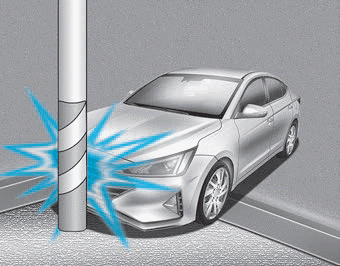
Air bags may not inflate if the vehicle collides with objects such as utility poles or trees, where the point of impact is concentrated and the collision energy is absorbed by the vehicle structure.
 Do Not Install a Child Restraint in the Front Passenger's Seat
Even though your vehicle is equipped with the OCS, never install a child restraint
in the front passenger's seat. An inflating air bag can forcefully strike a child
or child restraint result ...
Other information:
Hyundai Elantra AD (2016-2020) Service Manual: Rear Seat Cushion Cover Components and Components Location
Component Location
1. Rear seat cushion cover
...
Hyundai Elantra AD (2016-2020) Service Manual: Engine Control Module (ECM) Schematic Diagrams
ECM Terminal And Input/Output signal
Harness Connector
ECM Terminal Function
Connector [C300-A]
Pin No.DescriptionConnected to1- 2ETC Motor [+] control outputETC Motor3- 4Motor [-] control outputVariable Charge Motion Actuator (VCMA)5- 6- 7- 8- 9- 10Clutch switch signal input [M/T]Clutch s ...
